UFC Fighter Styles and Betting: How Matchup Dynamics Shape the Odds
 Available in US
Styles Make Fights — and They Make or Break Bets
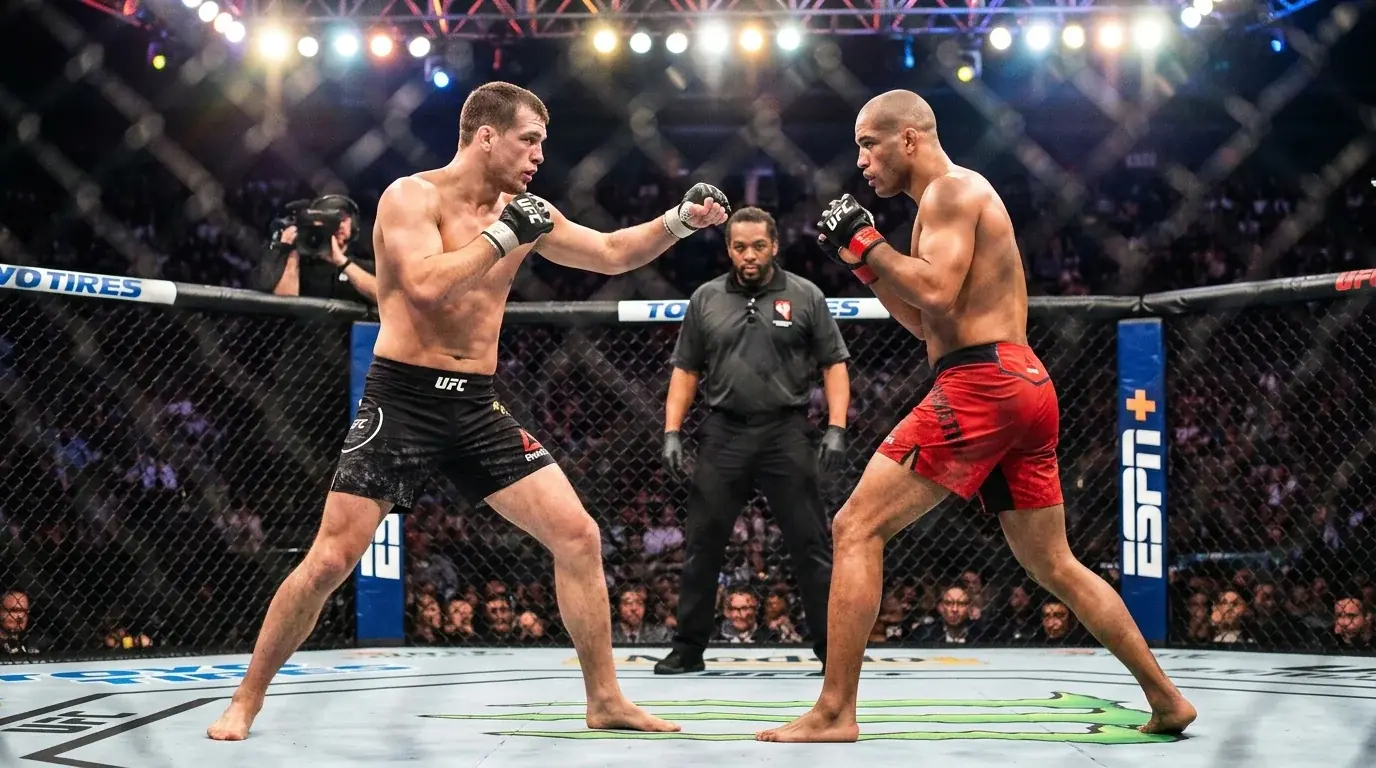
The most lopsided line I ever beat was a fight between a wrestler and a striker where the market had it at -115 either way — essentially a coin flip. I had watched both fighters extensively. The wrestler was elite at cage-cutting but had never faced a southpaw who circled to his power side. The striker was a southpaw who circled exclusively to his right. The stylistic matchup was a nightmare for the wrestler, and the market had not accounted for the specific interaction. I backed the striker at -115 and he dominated for three rounds. That bet was not about picking the better fighter. It was about understanding how two specific styles interact.
MMA is not like tennis or boxing, where the competitive framework is constrained. A UFC fight can be a kickboxing match, a wrestling contest, a jiu-jitsu exchange, or all three within a single round. The outcome depends not on who is better in some abstract sense but on which fighter can impose their preferred style. Betting on UFC without analysing the stylistic matchup is guessing. And with 517 fights in 2024 across 42 events, the opportunities to exploit style-based mispricings are constant.
See also: bet on ufc fights for matchup analysis and style breakdowns.
Striker vs Grappler: The Foundational Matchup
Every MMA bettor learns this dynamic first, and for good reason — it is the most common stylistic clash in the UFC. A striker wants to keep the fight standing, maintain distance, and win through superior hand and foot techniques. A grappler wants to close distance, secure a takedown, and control the opponent on the ground or against the fence.
The betting edge in striker-versus-grappler matchups lives in the takedown defence statistic. A striker with 90% takedown defence effectively neutralises the grappler’s primary weapon, turning the fight into a standing contest where the striker has the advantage. A striker with 55% takedown defence is going to spend significant time on their back, where even a moderate grappler can grind out rounds and threaten submissions.
I look at takedown defence not as a single number but as a contextual one. Against whom did this striker defend takedowns? A 90% rate against mediocre wrestlers is different from 90% against elite ones. The quality of the opposition matters enormously. A striker who has never faced a top-tier wrestler at their division may have an artificially inflated takedown defence number that collapses when the pressure increases.
The method-of-victory market is where striker-versus-grappler analysis pays off most directly. When the grappler’s path to victory runs through control time and scorecards (rather than submissions), the decision prop for the grappler carries better value than the moneyline. When the striker has knockout power against a grappler with a suspect chin, the KO/TKO prop on the striker can offer outsized returns. The moneyline tells you who wins. The style analysis tells you how — and the “how” is often mispriced.
Pressure Fighter vs Counter-Striker: The Tempo Battle
After striker-versus-grappler, the most consequential stylistic interaction is the pressure-fighter-versus-counter-striker dynamic. A pressure fighter moves forward, throws volume, and tries to overwhelm the opponent with output. A counter-striker waits, reads, and punishes overcommitted attacks with precise, high-damage responses.
When a pressure fighter meets a counter-striker, the fight tempo is determined by who imposes their rhythm. If the pressure fighter succeeds in maintaining constant forward movement, they accumulate strikes, control the cage, and win rounds through activity. If the counter-striker can maintain range and time their shots, they land the cleaner, more damaging blows — which often produce knockdowns and stoppages.
The betting implication is a split between decision and finish probability. Pressure-versus-counter matchups that stay at range tend to produce spectacular finishes in favour of the counter-striker. Those that devolve into clinchwork and grinding exchanges tend to go to decision in favour of the pressure fighter. The cage size (covered in the cage size analysis) is the critical modifier: small cage favours the pressure fighter, large cage favours the counter-striker.
Southpaw vs Orthodox: The Underrated Advantage
Left-handed fighters are a minority in the UFC, which means most fighters have limited experience against southpaw opponents. The angles are reversed: the lead foot position creates open-side exposure, power shots come from unexpected angles, and the jab-cross geometry that works against orthodox opponents becomes less effective.
I track every fighter’s record against southpaws separately from their overall record. A fighter who is 12-2 overall but 1-2 against southpaws is a different proposition when facing a left-hander. The market rarely adjusts for stance-specific records, because the sample sizes are small and the data is not easily accessible through standard MMA statistics sites. It requires manual tracking — watching the fights and noting which opponents were southpaw — but the edge is real and persistent.
Southpaw fighters at even-money or as slight underdogs against orthodox opponents with no documented southpaw experience are one of my highest-conviction betting angles. The adjustment is typically 3-7% in the southpaw’s favour, depending on how stance-dependent the orthodox fighter’s game is. A wrestler whose takedown entries all work from an orthodox lead position is more affected than a counter-puncher who adapts to either stance.
The Evolution Problem: Why Past Fights Are Not Always Predictive
A fighter’s style is not static. Camp changes, coaching adjustments, physical maturation, and strategic evolution mean that the fighter you are studying on film may not be the same fighter who shows up on Saturday. This is the hardest variable to account for in style-based analysis, and it is the one that produces my most painful losses.
The signals I watch for: has the fighter changed camps recently? New coaches often bring new techniques and new game plans. Has the fighter been inactive for more than 12 months? Long layoffs create uncertainty about conditioning and ring rust. Has the fighter moved up or down in weight? A weight-class change often accompanies a strategic shift — a fighter moving up may adopt a more aggressive, power-based approach; one moving down may rely more on speed and cardio.
When evolution signals are present, I reduce my confidence in the stylistic analysis and widen my probability range. A fight where I would normally estimate 60/40 might become 55/45 if one fighter has changed camps and the new style is uncertain. That wider range makes me more selective about betting — I need a bigger price discrepancy to justify the bet when the stylistic read is less certain.
Integrating Style Analysis With Market Odds
Style analysis alone does not make a bet. The analysis must disagree with the market’s pricing to create value. If the market has a wrestler at -200 and my style analysis agrees that the wrestling advantage is decisive, there is no bet — the market and I agree. The bet appears when the market prices the fight as even but the stylistic interaction points decisively to one side.
See also: learn the terminology with our UFC betting glossary.
The UFC’s 72% favourite win rate in 2024 tells you that the market gets the direction right most of the time. Style analysis is not about finding a different winner from the market. It is about finding fights where the market has the direction right but the magnitude wrong, or where the method-of-victory and round-betting markets have not fully incorporated the stylistic dynamic. Those secondary markets are where style analysis generates the most consistent returns — the moneyline absorbs most analytical inputs, but the props often lag behind.
How important is the striker vs grappler matchup in UFC betting?
It is the most foundational stylistic dynamic in MMA betting. The key variable is the striker’s takedown defence percentage — a high rate (above 80%) neutralises the grappler’s primary weapon and keeps the fight standing. The method-of-victory market is where this analysis generates the most value, allowing you to bet on the specific path to victory rather than just the winner.
Does fighting a southpaw really affect UFC outcomes?
Yes. Most fighters have limited experience against left-handed opponents, and the reversed angles create unfamiliar defensive challenges. Fighters with poor records against southpaws are often overpriced when facing one, and the market rarely adjusts for stance-specific performance data because it requires manual tracking. A 3-7% probability adjustment in the southpaw’s favour is typical for matchups where the orthodox fighter lacks documented southpaw experience.
Prepared by the bet on ufc Fights editorial staff.