UFC Cash Out Betting: When to Take Early Profit and When to Let It Ride
 Available in US
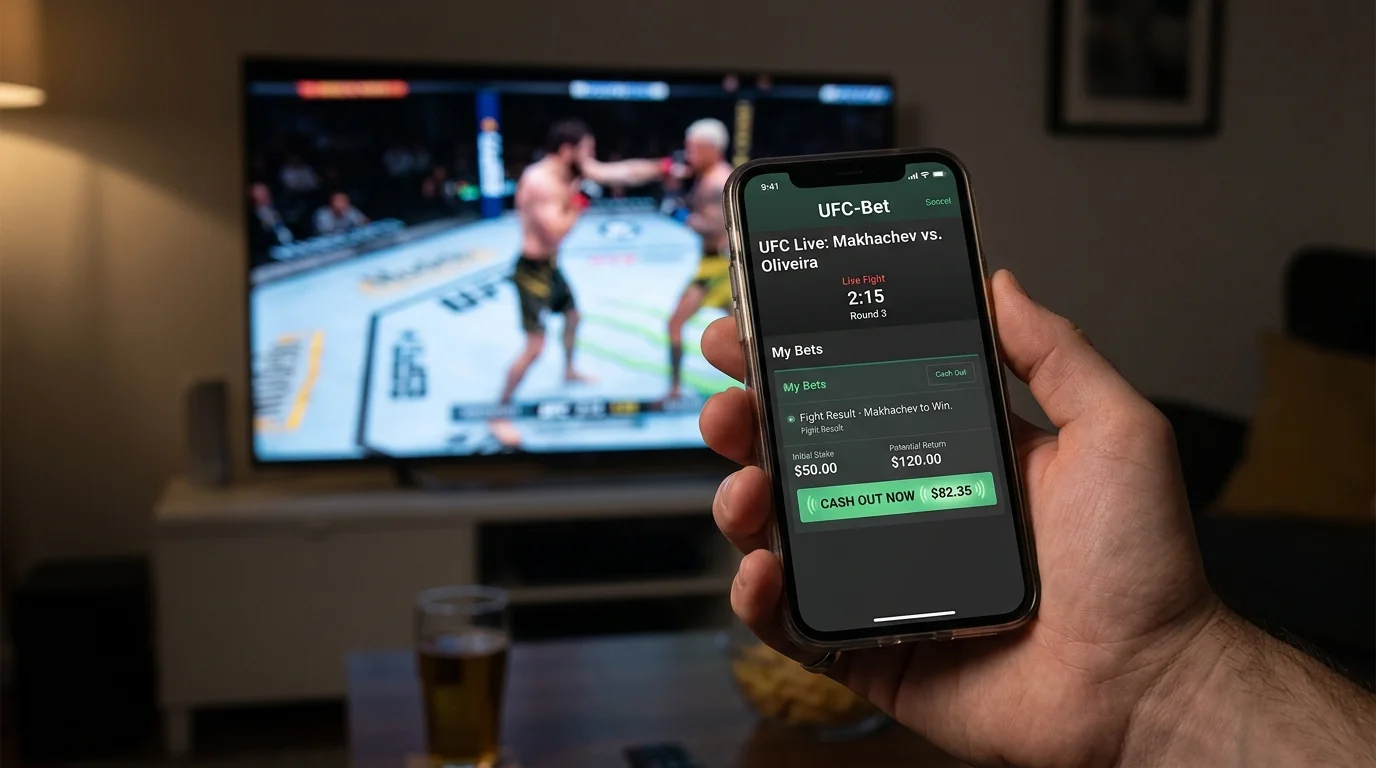
- The Button That Changes Everything Between Rounds
- How UFC Cash Out Works at UK Sportsbooks
- The Bookmaker’s Margin on Cash Out — and Why It Matters
- When Cash Out Adds Value to Your UFC Betting
- When Cash Out Costs You Money
- Partial Cash Out: The Tool Most Bettors Underuse
- Cash Out as Part of a Broader Risk Framework
The Button That Changes Everything Between Rounds
Round two has just ended. Your fighter is up two rounds to nil on every conceivable scorecard, and the cash-out button on your phone is blinking with a number that represents 78% of your potential full payout. The fighter is visibly tired. The opponent is starting to time counter shots. Do you take the money or let it ride? I have faced this exact decision dozens of times, and the answer is never as obvious as it looks in hindsight.
Cash out is one of the most powerful risk-management tools in modern sports betting, and UFC is one of the sports where it is most valuable. Fights shift on a single exchange — a knockdown, a takedown, a caught kick — and what looked like a locked-in winner thirty seconds ago can become a desperate underdog in the blink of an eye. On DraftKings and FanDuel, UFC fight nights account for 11% of all live-bet clicks, and cash-out activity spikes dramatically during the breaks between rounds. The feature exists because bettors want it. Using it well requires understanding when it adds value and when it costs you money. For the broader live-betting framework that cash out operates within, the live betting strategy guide covers in-play decision-making from first bell to last.
See also: bet on ufc fights for cash out timing and risk management.
How UFC Cash Out Works at UK Sportsbooks
Cash out lets you settle a bet before the fight concludes. The sportsbook calculates a current value for your bet based on the live odds at that moment, applies a margin, and offers you that amount. If your fighter is winning, the cash-out value will be positive but less than the full potential payout. If your fighter is losing, the cash-out value will be less than your original stake — but more than the zero you would receive if the bet loses entirely.
The mechanics vary by operator. Some offer full cash out only — take the entire offered amount or leave it. Others offer partial cash out, letting you settle a portion of your bet while keeping the rest active. Partial cash out is the more flexible tool, because it lets you lock in some profit while maintaining exposure to the full payout on the remaining portion. In a sport as volatile as UFC, that flexibility matters.
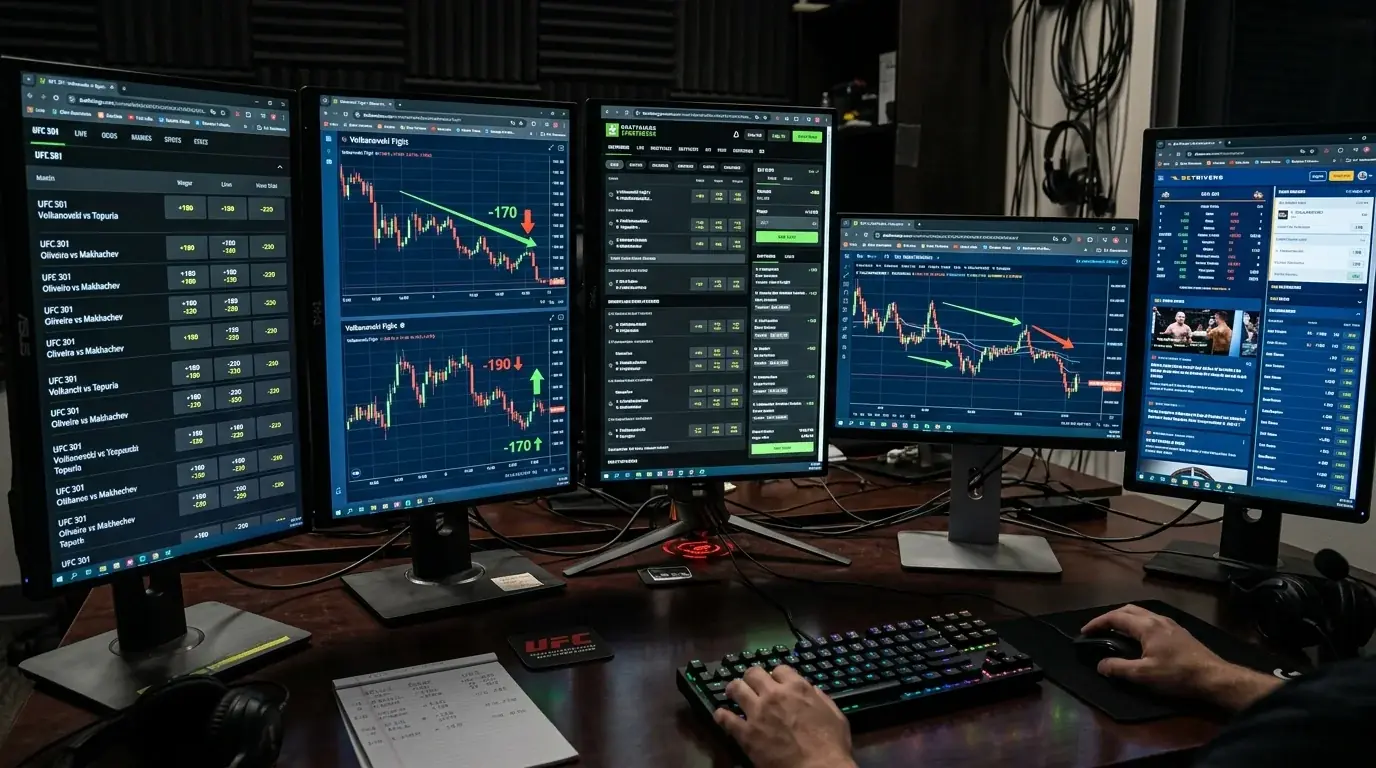
The cash-out value updates in near-real-time during a fight, shifting with every significant strike, takedown, and position change. UK sportsbooks using live data feeds from providers like Sportradar can update cash-out prices within seconds of in-cage action. Between rounds, the cash-out value stabilises briefly — that window is usually the best moment to make a decision, because you have 60 seconds to evaluate without the price changing under your thumb.
The Bookmaker’s Margin on Cash Out — and Why It Matters
Cash out is not a free feature. The offered price includes a margin for the sportsbook, typically 3-8% below the fair value of your bet. That margin is the cost of certainty — you are paying to remove risk. In some situations, that cost is worth paying. In others, you are handing back edge that you earned through pre-fight analysis.
The margin tends to be widest during high-volatility moments: right after a knockdown, during a submission attempt, or when one fighter is visibly hurt. These are exactly the moments when the temptation to cash out is strongest, because the emotional impulse to protect your profit is highest. The sportsbook knows this. The margin widens precisely when you are most likely to accept a discounted price.
I calculate the fair cash-out value myself before checking the offered price. If I believe my fighter has a 75% chance of winning the remaining rounds, the fair value of a 100-pound potential payout is 75 pounds. If the sportsbook offers 68 pounds, the margin is 9% — steep. If they offer 72 pounds, the margin is 4% — reasonable for the certainty you are buying. That quick calculation takes ten seconds and prevents me from accepting a heavily discounted price during an emotionally charged moment.
When Cash Out Adds Value to Your UFC Betting
Cash out is a legitimate strategic tool in three specific scenarios. First, when new information has emerged during the fight that changes your pre-fight assessment. If you backed a wrestler and the wrestler is failing to complete takedowns — a problem you did not anticipate — the thesis behind your bet has weakened. Cashing out locks in partial profit while the fighter is still ahead on the scorecards, rather than riding a deteriorating position to a potential loss.
Second, when the fight dynamic has shifted to favour your opponent. A fighter who started strong but is fading visibly — slowing output, dropping hands, breathing heavily between exchanges — may still be ahead on the cards but is increasingly likely to be finished or lose the remaining rounds. Cashing out while the scorecard advantage still inflates your bet’s value is a rational response to a changing probability landscape.
Third, when the cash-out value exceeds your updated probability estimate. If you now believe your fighter has only a 55% chance of winning but the cash-out offer implies a 65% value, you are being offered more than your bet is worth. Take the money. This scenario is rarer but occurs when the live odds lag behind the in-cage action — a brief window where the sportsbook has not fully adjusted to what you are watching.
When Cash Out Costs You Money
Cash out destroys value in two common scenarios. First, when your pre-fight thesis remains intact and the fight is unfolding as expected. If you backed a cardio-heavy fighter to grind a decision and they are controlling the fight through two rounds, cashing out before the third surrenders profit without any analytical justification. The thesis is working. Let it work.
Second, when you are cashing out purely because of anxiety rather than analysis. The fight is going well, your fighter is winning, but the mere possibility of an upset is making you uncomfortable. That discomfort is emotional, not informational. The probability of losing has not changed from your pre-fight estimate — you are just feeling the stakes more acutely now that the fight is live. Cashing out in this state is paying a 5-8% margin for emotional relief, which compounds into a significant cost over a season of betting.
I keep a rule that has saved me thousands of pounds over the years: no cash out in the first round unless my fighter has been badly hurt. The first round is too early for a thesis to be confirmed or denied, the live odds are most volatile (and therefore the cash-out margin is widest), and the emotional pull of a dramatic opening exchange is strongest. First-round cash outs are almost always emotional, not analytical.
Partial Cash Out: The Tool Most Bettors Underuse
Full cash out is a binary choice: all or nothing. Partial cash out adds nuance. Cashing out 50% of your bet locks in half the current profit while keeping the other half active for the full payout. If your fighter wins, you collect the partial cash-out amount plus the remaining half at full price. If your fighter loses, you keep the partial cash-out amount and lose only the remaining half.
I use partial cash out most frequently in five-round championship fights where my fighter has built a lead through three rounds but faces a dangerous opponent in the championship rounds. Cashing out 40-50% of the bet after round three secures a guaranteed profit regardless of the outcome, while maintaining meaningful exposure to the full payout. The maths of partial cash out are more favourable than full cash out in most scenarios, because you are paying the bookmaker’s margin on only a portion of your bet rather than all of it. UK online gambling generated 1.45 billion pounds in gross gaming yield during Q1 2025 alone, and partial cash out is one of the newer features that operators have introduced to keep bettors engaged during live events — but unlike most engagement features, this one can serve the bettor’s interests when used analytically.
See also: new to MMA betting? Start with our UFC betting for beginners UK guide.
Cash Out as Part of a Broader Risk Framework
Cash out is a tool, not a strategy. Using it well requires the same analytical discipline that drives your pre-fight betting. Before each fight, I set a mental framework: under what conditions would I consider cashing out, and what cash-out value would I need to accept? That pre-commitment removes the in-the-moment emotional decision-making that leads to bad cash-out choices. The button is always there, blinking with a number that looks like free money. Knowing in advance when to press it — and when to ignore it — is the difference between cash out as risk management and cash out as profit leakage.
Does the bookmaker make money when I cash out a UFC bet?
Yes. The cash-out offer includes a margin, typically 3-8% below the fair value of your bet based on current live odds. This margin is the cost of settling early. The margin tends to be widest during high-volatility moments such as knockdowns or submission attempts, precisely when the temptation to cash out is strongest.
Can I partially cash out a UFC bet in the UK?
Many UKGC-licensed sportsbooks offer partial cash out, which lets you settle a portion of your bet while keeping the rest active. This feature provides more flexibility than full cash out and is particularly useful in five-round championship fights where you want to lock in some profit while maintaining exposure to the full potential payout.
Created by the ”bet on ufc Fights” editorial team.