UFC Event Schedule and UK Betting: Start Times, Card Structure, and How to Plan Your Wagers
 Available in US
- Saturday Night — or Sunday Morning, Depending on Your Time Zone
- Standard UK Start Times for UFC Events
- The Structure of a UFC Card and When Markets Open
- International Events: When the Schedule Works in Your Favour
- Planning Your Betting Calendar Across a UFC Season
- Using the Schedule to Your Advantage Rather Than Letting It Use You
Saturday Night — or Sunday Morning, Depending on Your Time Zone
The first year I bet on UFC seriously, I set an alarm for 3:00 AM on a Sunday to catch a main event. I placed a live bet while half asleep, got the stake wrong, and lost more than I intended on a fight I could barely keep my eyes open for. That experience taught me the most practical lesson in my entire betting career: the UFC schedule is built for American prime time, and UK bettors who do not plan around that reality make avoidable mistakes from fatigue, poor timing, and impulsive decision-making at hours when their judgement is compromised.
The UFC stages approximately 42 events per year — 13 numbered PPV events and around 30 Fight Night cards. Across those events in 2024, the organisation hosted 517 individual bouts. That volume means there is a card to bet on almost every Saturday, with occasional midweek events and international cards that shift the timing. For UK punters, understanding the schedule is not just about knowing when to tune in — it is about structuring your betting process around the realities of late-night wagering. For how card structure specifically affects betting markets, the Fight Night vs PPV breakdown covers the differences in market efficiency between card tiers.
See also: bet on ufc fights for event calendars and fight-night tips.
Standard UK Start Times for UFC Events
Most UFC events are held in the United States, which means the schedule is anchored to American Eastern Time. For UK bettors on GMT or BST, this translates to late-night and early-morning start times that vary by card type and location.
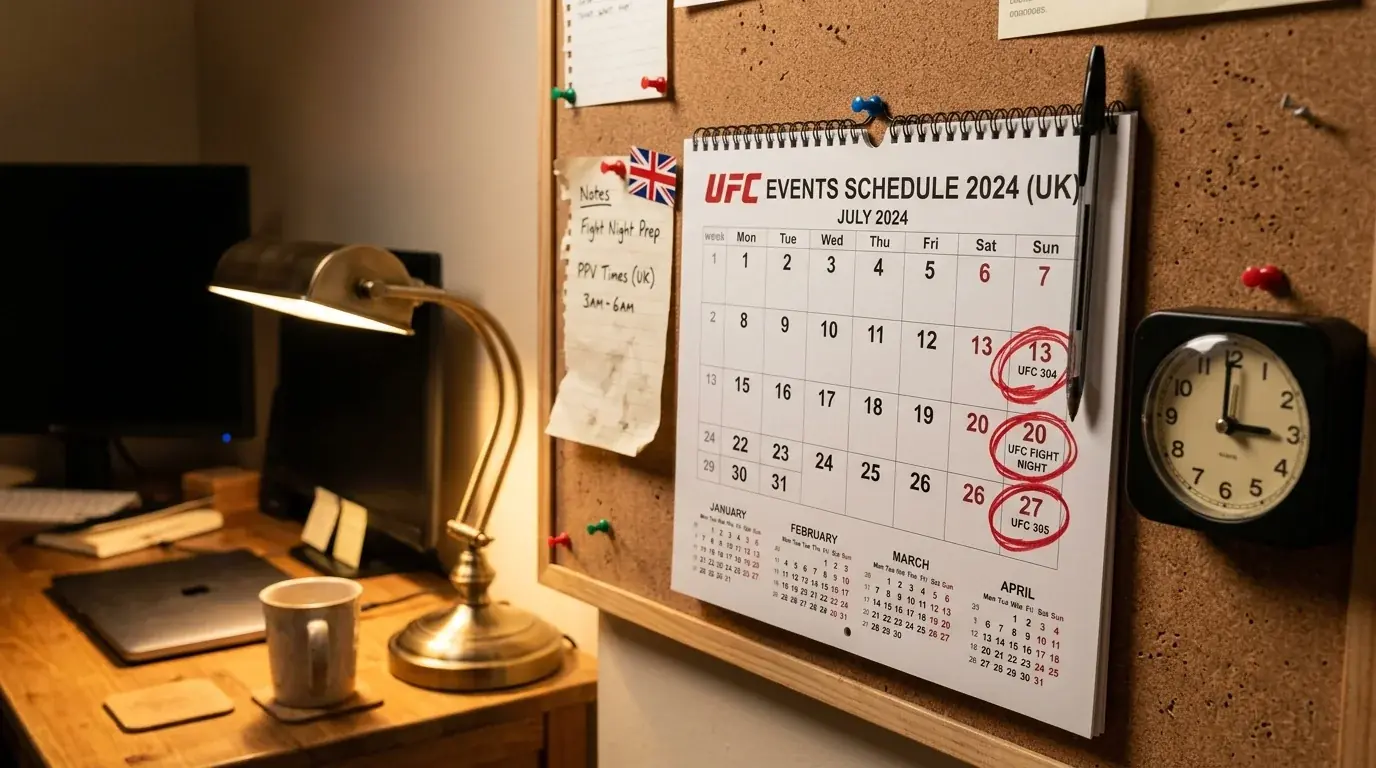
Numbered events — the premium PPV cards — typically begin their early prelims at around 11:00 PM UK time (BST) or 10:00 PM GMT. The main card usually starts at 3:00 AM BST / 2:00 AM GMT, with the main event fight entering the Octagon between 5:00 and 6:00 AM. These are long evenings that stretch from Saturday night into Sunday morning, and the main event — the fight most bettors care about — happens at the point of maximum fatigue.
Fight Night cards follow a similar pattern when held in the US, though the start times can be slightly earlier. Fight Nights held at the UFC Apex in Las Vegas typically begin their main cards around 1:00 AM BST. European and Middle Eastern events are the exception — cards held in London, Abu Dhabi, or Paris offer UK-friendly start times, with main cards beginning in the early evening and main events wrapping up before midnight.
The practical implication for betting: place your pre-fight bets during the day or early evening, before fatigue sets in. If you plan to live-bet during the card, decide on your live-betting budget and specific fights before the event begins. Making staking decisions at 4:00 AM after six hours of watching fights is a recipe for oversizing bets, chasing losses, and making impulsive selections you would not touch at noon.
The Structure of a UFC Card and When Markets Open
A typical UFC event has three segments: early prelims, prelims, and the main card. The early prelims feature the least-known fighters and the fewest betting markets. The prelims step up in profile, with more market coverage from sportsbooks. The main card — usually five fights — features the highest-profile matchups, the deepest prop markets, and the most betting volume.
Sportsbook markets for UFC events generally open seven to ten days before the event, starting with moneyline odds for the main card fights. Prop markets — method of victory, over/under rounds, fight goes the distance — appear closer to fight week, sometimes only two or three days before the event. Early prelim markets may not appear until the day of the event at some operators.
For bettors, the timing of market opening matters because early prices are often the sharpest — they reflect the sportsbook’s initial assessment before public money starts moving the lines. If you have done your research early, placing bets when markets first open can capture value that disappears as the line moves toward the public consensus. I make my initial assessments when the card is announced and place my core bets when markets open, then revisit only if significant news (injury, weight miss, short-notice replacement) changes the picture.
International Events: When the Schedule Works in Your Favour
Several times a year, the UFC holds events in Europe, the Middle East, or Asia-Pacific — and these are the cards UK bettors should circle on their calendars. A UFC event in London or Paris means a main card starting at 6:00 or 7:00 PM local time, which is prime evening viewing in the UK. No sleep deprivation, no 4:00 AM live bets, no Sunday morning regrets.
European events also tend to feature a higher proportion of European fighters, whose styles and records UK bettors may follow more closely than American or Brazilian fighters who dominate US-based cards. That familiarity translates into better-informed wagering — you are more likely to have seen these fighters compete, to understand their tendencies, and to identify mispriced odds when the broader market is less familiar with the European talent.
The finish rate dropped to 45% in 2024 across all UFC events regardless of location. But international events sometimes produce different fight dynamics because of the crowd energy, the travel factor for non-local fighters, and the time-zone adjustment that affects training camp preparation. I do not adjust my models significantly for event location, but I note it as a background variable that occasionally creates value — particularly when a fighter who has never competed outside their home country faces a long-haul journey and a hostile crowd for the first time.
Planning Your Betting Calendar Across a UFC Season
The UFC schedule is relentless. Nearly every week brings a card, and the temptation to bet every single one is strong. In my early years, I did exactly that — and my results suffered because I was spreading my research time too thin and betting on fights I had not properly analysed.
Now I tier the calendar. Numbered events get full research treatment: every fight on the main card, selected prelim fights, prop markets evaluated alongside moneylines. Fight Night cards get a lighter approach: I research the main event and co-main thoroughly, scan the rest for any obvious value, and pass on fights where I do not have a clear thesis. Apex cards with unfamiliar fighters on short notice get the lightest treatment — sometimes I skip them entirely if the matchups do not offer anything worth the research investment.
That tiered approach means I bet seriously on roughly 25-30 events per year rather than all 42. The events I skip are not lost opportunities — they are noise that would dilute my edge if I forced bets on them. The schedule will always offer another card next week. Patience with the calendar is the cheapest form of bankroll protection available.
Using the Schedule to Your Advantage Rather Than Letting It Use You
The UFC calendar is designed to maximise American viewership and global engagement. It is not designed around the convenience of UK bettors. Adapting to that reality — placing pre-fight bets during sensible hours, limiting late-night live betting to a predetermined budget, prioritising European events for your most engaged betting sessions, and skipping cards where the research investment does not justify the expected return — transforms the schedule from a liability into a structure you can work within profitably.
The bettors who struggle most with the UFC schedule are the ones who treat every card as a mandatory betting event and every main event as a must-watch. The bettors who profit are the ones who treat the schedule as a menu — selecting the events and fights that align with their analytical strengths and passing on the rest. There will always be another card. The only question is whether you will be prepared for it.
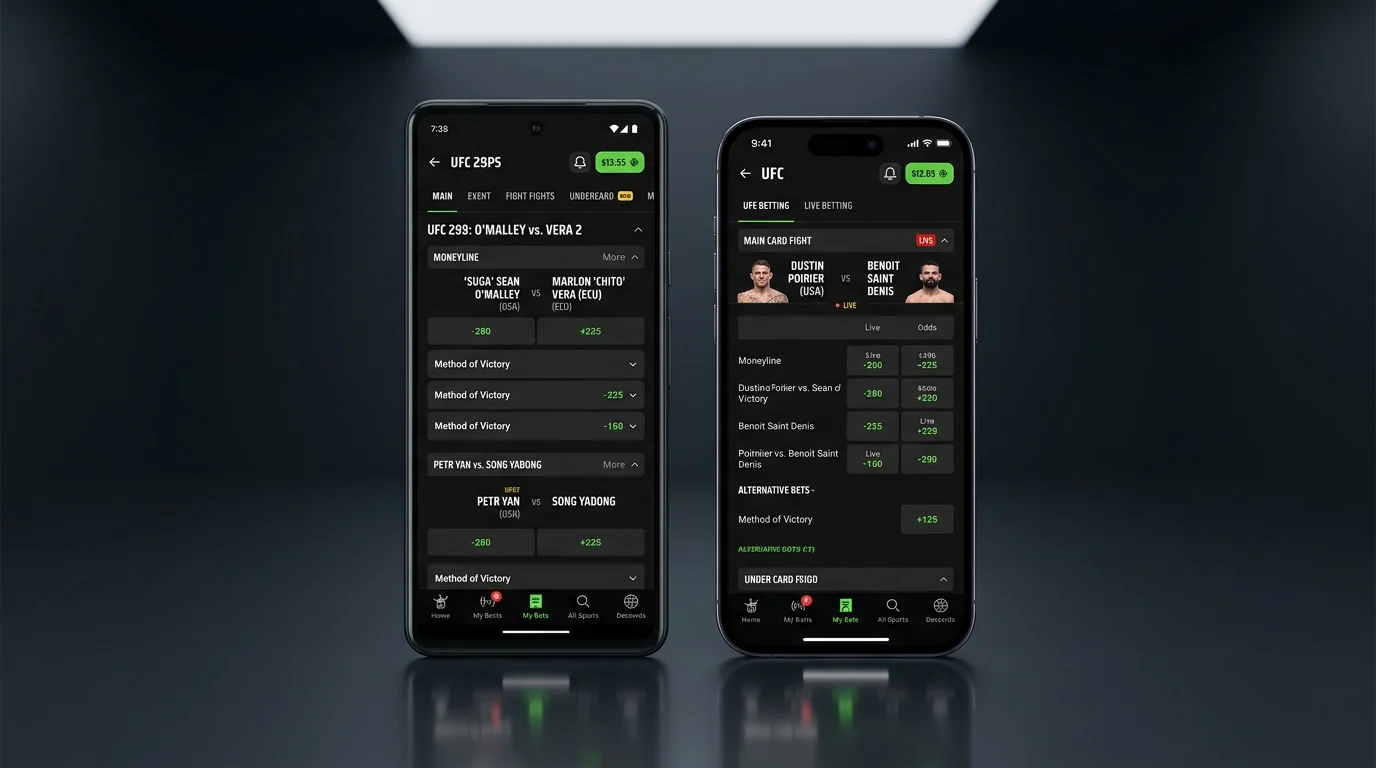
See also: place bets on the go with the best UFC betting app for Android.
What time do UFC events start in the UK?
Most US-based UFC events begin their early prelims around 11:00 PM BST (10:00 PM GMT), with main cards starting around 3:00 AM BST (2:00 AM GMT). The main event fight typically enters the cage between 5:00 and 6:00 AM. European UFC events offer UK-friendly timing with main cards starting in the early evening.
How far in advance do UFC betting markets open?
Sportsbook markets typically open seven to ten days before the event, starting with moneyline odds for the main card. Prop markets appear closer to fight week, often two to three days before the event. Early prelim markets may not appear until the day of the event. Early prices often represent the sharpest odds before public money moves the lines.
Published by the bet on ufc Fights team.