UFC Fight Night vs PPV Betting: How Card Structure Affects Your Wagers
 Available in US
- Not All UFC Cards Are Built the Same — Your Betting Should Reflect That
- PPV Cards: Tighter Lines, Higher Volume, and the Main-Event Trap
- Fight Night Cards: Wider Lines, Less Attention, More Opportunity
- Prelim Fights: The Overlooked Goldmine
- Timing Your Bets: Early Lines vs Fight-Week Adjustments
- Matching Your Strategy to the Card in Front of You
Not All UFC Cards Are Built the Same — Your Betting Should Reflect That
In 2024, the UFC held 517 bouts across 42 events. Some of those events were numbered pay-per-view spectacles headlined by champions. Others were midweek Fight Night cards tucked into smaller venues with lower-profile matchups. I bet on both, but I approach them very differently — because the betting dynamics shift depending on the card structure, the fighter profiles, and the amount of money flowing into the market.
The distinction matters for UK punters especially. Fight Night events often take place at times more accessible to British audiences, with main cards starting earlier than the late-night PPV schedule. But accessibility and betting value are different things entirely. Understanding how card structure affects line accuracy, market efficiency, and upset frequency is one of those edges that costs nothing to acquire but pays dividends every time you open a sportsbook.
See also: bet on ufc fights for event format comparisons.
PPV Cards: Tighter Lines, Higher Volume, and the Main-Event Trap
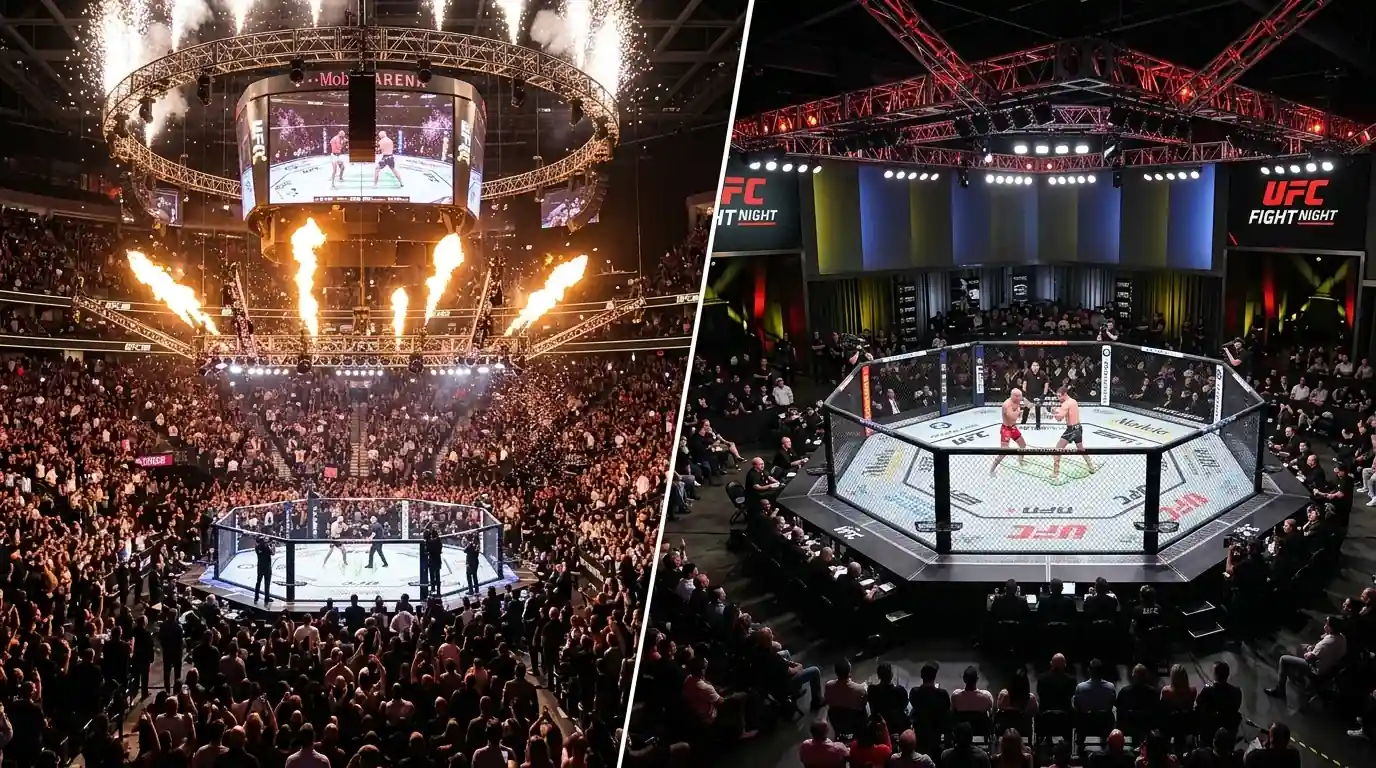
Pay-per-view cards — numbered events like UFC 300, UFC 305, and so on — attract the highest betting volume of any UFC events. The main events feature champions and top contenders, the co-main events feature ranked fighters, and the main card is stacked with recognisable names. All of that attention means one thing for bettors: sharper lines.
When millions of pounds flow into a market, the odds converge toward true probability faster than in lower-volume markets. Sharp bettors — syndicates and professional handicappers who move lines with large wagers — concentrate their activity on PPV main cards because the liquidity is sufficient to absorb their bet sizes without moving the line against themselves. The result is that PPV main-card moneylines are among the most efficient odds in all of sports betting.
The main-event trap is the tendency for recreational bettors to overweight the main event at the expense of the undercard. Every punter has an opinion on the title fight. Fewer have opinions on the prelim opener. This concentration of casual money on the main event does not make it easier to beat — the sharp money corrects most of the mispricing before fight night. But it does mean the bookmaker’s promotional activity (enhanced odds, free bet offers) clusters around the headline fight, and those promotions can offer genuine value even when the underlying line is efficient.
For my own betting, PPV main cards are where I am most selective. I might find one or two bets on a five-fight main card that meet my value threshold. The rest I watch and enjoy without risking money, because the lines are too tight to exploit.
Fight Night Cards: Wider Lines, Less Attention, More Opportunity
Fight Night events — non-PPV cards that air on ESPN or streaming platforms — are where I find the most consistent value. The betting volume is lower, the matchups feature fewer ranked fighters, and the market’s attention is diluted across the UFC’s near-weekly schedule. All of these factors create inefficiency.
Wider lines are the direct consequence of lower volume. When less money flows into a market, the bookmaker has less information to refine the odds, and the opening lines are more likely to contain pricing errors. I have consistently found larger gaps between my estimated probabilities and the offered odds on Fight Night cards compared to PPV events. The individual edge per bet might not be larger, but the frequency of finding bets that clear my value threshold is higher.
Fight Night cards also feature more mismatches and more debut fighters. Fighters making their UFC debut are particularly difficult for the market to price accurately because their opposition history is in regional promotions with less data coverage. A fighter with a 10-1 record in a regional circuit could be a genuine prospect or a product of weak competition — and the bookmaker’s model often struggles to distinguish between the two. This is where sport-specific knowledge (watching the regional fights, knowing the calibre of the competition) creates an informational edge that is harder to develop for the well-documented top-15 fighters on PPV main cards.
The 72% favourite win rate across all UFC bouts in 2024 masks a meaningful split between card types. On PPV main cards, where matchups are tighter and both fighters are elite, the favourite win rate is lower. On Fight Night cards, where skill gaps can be wider, favourites tend to win at a slightly higher rate — but the odds often already reflect this, pricing Fight Night favourites at shorter odds than PPV favourites in equivalent matchups.
Prelim Fights: The Overlooked Goldmine
Preliminary bouts — the fights that air before the main card on every UFC event — receive the least betting attention and consequently have the widest lines. On a 13-fight card, the four or five prelim bouts are where my hit rate on value bets is highest.
The reason is structural. Prelim fighters are less well-known, which means the betting public has weaker opinions and the market relies more heavily on algorithmic pricing. Those algorithms weight recent UFC results and official statistics, but many prelim fighters have limited UFC records — they might be on their first, second, or third UFC bout. The algorithm fills the gaps with regional-fight data or assumes average performance, creating systematic pricing errors when a fighter’s true level diverges from the algorithmic baseline.
I spend proportionally more time researching prelim fighters than main-card fighters, because the informational edge is larger. A 30-minute dive into a prelim fighter’s regional record, training camp changes, and stylistic tendencies can reveal information that the market has not incorporated. The same 30 minutes spent on a champion or top-five contender adds almost nothing, because every piece of publicly available information about those fighters is already priced in.
Timing Your Bets: Early Lines vs Fight-Week Adjustments
Line movements between the opening odds and fight-night closing odds follow different patterns for PPV and Fight Night events. PPV lines typically open sharper because bookmakers invest more effort in pricing high-profile events accurately from the start. Fight Night lines, by contrast, can move significantly between opening and closing as late information (injury reports, weight-cut footage, training camp rumours) enters the market.
For PPV events, I usually bet closer to fight time, waiting for the line to settle and watching for any sharp-money movements that signal where the professional bettors are landing. For Fight Night events, I often bet early — within 24 hours of lines opening — because the early inefficiency is largest before the market has time to self-correct.
Weight-cut information is the single most valuable late-breaking input for UFC betting, and it disproportionately affects Fight Night events where fighters are less experienced at managing the cut. A fighter who looks drawn and depleted at Friday’s weigh-in is a different proposition from one who weighs in comfortably. Weight cuts and their impact on betting lines remain one of the least efficiently priced factors in UFC markets, particularly on non-PPV cards.
Matching Your Strategy to the Card in Front of You
The practical takeaway is straightforward: do not treat every UFC card the same way. PPV events reward selectivity and patience — bet sparingly on the main card, focus on promotions and specific high-conviction plays. Fight Night events reward preparation and research depth — spend more time on prelim fighters, bet earlier, and expect to find more actionable value per card.
See also: check how divisions differ with our finish rate by weight class data.
My average number of bets per PPV is two. My average per Fight Night is four. That ratio is not arbitrary — it reflects the difference in market efficiency between the two card types. Adjusting your betting volume and approach to the specific event structure is a low-effort, high-impact improvement that most UFC bettors never make because they do not think about card structure at all.
Are UFC Fight Night events easier to bet on than PPV cards?
Not inherently easier, but they tend to offer more frequent value opportunities. Lower betting volume on Fight Night events creates wider lines and less efficient odds, particularly on preliminary bouts and debut fighters. However, the information available on these fighters is often thinner, which makes research more important and analysis more challenging.
Do UFC PPV main events have tighter odds than other fights?
Yes. Main events on PPV cards attract the highest betting volume and the most attention from sharp bettors and professional handicappers. This concentration of money and analysis pushes the odds closer to true probability, making them among the most efficient lines in combat sports. Finding genuine value on a PPV main event is harder than on a Fight Night prelim.
Written by the editors at bet on ufc Fights.