Is UFC Betting Legal in the UK? UKGC Rules, Licensing, and What’s Permitted
 Available in US
The Short Answer: UFC Betting Is Fully Legal Under UK Law
I get this question at least once a week, usually from someone who has been watching UFC for years but only just considered putting money on a fight. The answer is straightforward: yes, betting on UFC is completely legal in the United Kingdom, provided you use a bookmaker licensed by the UK Gambling Commission. There is no special category for combat sports, no additional restrictions, no grey area. UFC sits alongside football, horse racing, tennis, and every other sport covered by the Gambling Act 2005.
The UK has one of the most mature regulated gambling markets in the world. There are approximately 5,825 licensed betting premises across Britain, plus dozens of online operators holding remote operating licences. The total gambling industry generated 16.8 billion pounds in gross gaming yield during the April 2024 to March 2025 financial year, growing 7.3% year on year. MMA is a small but rapidly growing slice of that figure. The regulatory framework that governs your UFC bet is the same one that covers a bet on the Grand National — the same consumer protections, the same licensing requirements, the same dispute resolution mechanisms.
See also: bet on ufc fights for UK-specific legal and regulatory info.
How the UKGC Regulates Combat Sports Betting
The UK Gambling Commission does not regulate individual sports — it regulates the operators who offer betting on them. Any bookmaker wanting to offer UFC markets to UK customers must hold a remote operating licence from the UKGC. That licence imposes obligations around customer fund protection, anti-money laundering, age verification, responsible gambling, and fair terms. The licence is not sport-specific: a bookmaker licensed to offer football betting can offer UFC betting under the same licence without additional approval.
What the UKGC does require is that operators offering betting on any event ensure the integrity of that event’s outcomes. In practice, this means licensed bookmakers use monitoring services — most commonly IBIA (International Betting Integrity Association) or, in UFC’s case, IC360 — to flag suspicious betting patterns. If an anomaly is detected, the operator can suspend markets, void bets, and report the incident to the Commission and the relevant sports body.
The UKGC also sets rules about how odds are displayed, how promotions are advertised, and what information must be available to customers. Every licensed operator must display their licence number on their website, link to the Commission’s website, and provide access to dispute resolution services. These requirements apply equally whether you are betting on a Premier League match or a UFC Fight Night prelim.
For a deeper look at the integrity systems that monitor UFC wagering, the beginners’ walkthrough covers how these protections work in practice when you set up your first account.
How to Verify a Bookmaker’s UKGC Licence Before You Bet
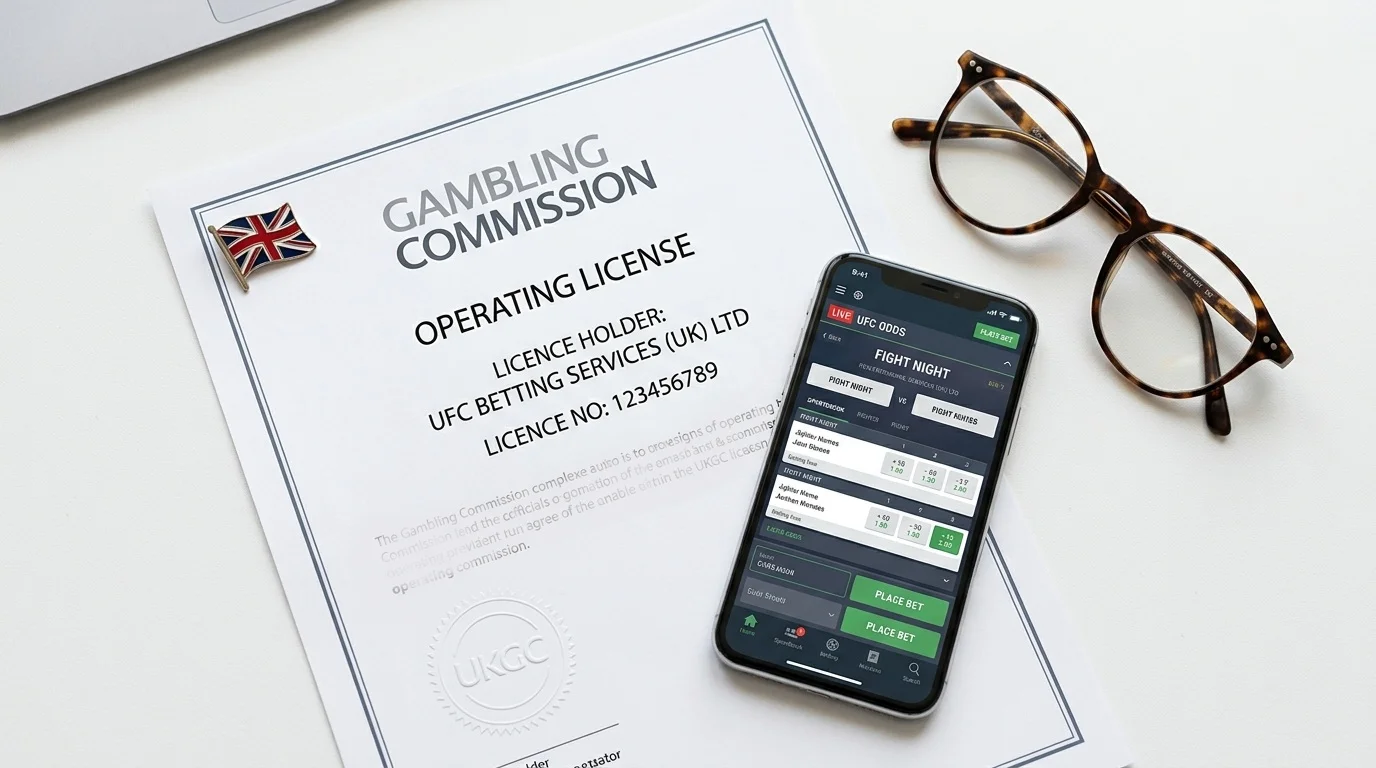
This takes thirty seconds and it is a step I recommend to everyone, regardless of experience. Go to the UKGC’s public register at the Gambling Commission website. Enter the operator’s name. If they hold a valid licence, the register will show it along with the licence number, the activities permitted, and any regulatory actions taken against them.
Every licensed operator is also required to display their licence number in the footer of their website and within their mobile app. If you cannot find a licence number, or if the number does not match the UKGC register, do not bet with that operator. Unlicensed operators are not covered by UK consumer protections. Your funds are not ring-fenced, your bets are not subject to fair-terms requirements, and you have no recourse if something goes wrong.
A common scenario: a UK punter sees a UFC promotion from an offshore operator offering superior odds or a larger bonus. The operator may be licensed in Curacao, Malta, or another jurisdiction, but without a UKGC licence specifically, they cannot legally offer services to UK residents. Using such an operator does not expose you to criminal liability as a bettor, but it removes every regulatory protection you would have with a licensed UK bookmaker. The marginal improvement in odds is never worth the loss of protection.
Age Requirements, Tax on Winnings, and Self-Exclusion Rights
You must be 18 or older to bet on UFC in the UK. This is a hard legal requirement, not a guideline. Operators are required to verify your age before allowing you to deposit or place a bet, and the UKGC actively monitors compliance. Underage gambling checks have tightened significantly in recent years, with operators required to verify identity within 72 hours of account creation and before any withdrawal.
Tax on winnings is one of the genuinely pleasant features of UK gambling law: there is none. Since 2001, the UK has levied betting duty on operators (currently at 21% of gross gaming yield for remote operators), not on punters. Your UFC winnings are tax-free. You do not need to declare them on your tax return. Provisional data from HMRC for April to August 2025 shows total receipts from betting and gaming duties at 1,786 million pounds, up 9% year on year — but that bill is paid by the bookmakers, not by you.
Self-exclusion is a legal right, not a favour from the bookmaker. Under UKGC rules, you can self-exclude from any licensed operator for a minimum of six months. GAMSTOP, the national self-exclusion scheme, lets you exclude from all UKGC-licensed online operators simultaneously with a single registration. During the exclusion period, the operator must close your account, return any balance, and not send you marketing communications. This is enforceable — if an operator breaches a self-exclusion, the UKGC can take regulatory action including fines and licence revocation.
Cooling-off periods, deposit limits, and reality checks (periodic pop-ups showing time spent and money wagered) are additional tools that all licensed operators must offer. These are not optional add-ons; they are regulatory requirements. I encourage every bettor — beginner or experienced — to use deposit limits as a standard part of account setup rather than waiting for a problem to develop.
See also: find value on both sides with our favourites vs underdogs analysis.
Betting From Anywhere in the UK
UFC betting is legal throughout the United Kingdom: England, Scotland, Wales, and Northern Ireland. The Channel Islands (Jersey, Guernsey) and the Isle of Man have their own gambling regulatory bodies separate from the UKGC, but UKGC-licensed operators are generally accessible from these territories as well. If you are physically located in the UK, you can bet on UFC at any UKGC-licensed operator.
One geographical note: if you travel abroad, your ability to access your UK betting account depends on the laws of the country you are in and the operator’s terms. Some operators geo-restrict access from certain jurisdictions. If you plan to bet on a UFC event while travelling, check your operator’s terms regarding international access before you depart.
Do I have to pay tax on UFC betting winnings in the UK?
No. The UK does not tax gambling winnings. Betting duty is levied on operators, not on customers. Your UFC winnings are entirely tax-free and do not need to be declared on your tax return. This applies to all forms of gambling with UKGC-licensed operators, including online and in-shop betting.
Can I bet on UFC from Northern Ireland or the Channel Islands?
Yes for Northern Ireland, which is part of the United Kingdom and fully covered by UKGC regulation. The Channel Islands (Jersey, Guernsey) and the Isle of Man have their own gambling regulatory bodies, but most UKGC-licensed operators accept customers from these territories. Check the specific operator’s terms for any geographical restrictions.
Prepared by the bet on ufc Fights editorial staff.