UFC Betting for Beginners in the UK: A First-Timer’s Walkthrough
 Available in US
- 43 Events a Year, Millions of Bets — Here’s How to Start
- Setting Up Your Betting Account: UKGC, Verification, and Deposits
- Placing Your First UFC Bet: A Click-by-Click Guide
- Bankroll Basics: How Much to Start With and How to Stake
- Five Beginner Traps to Avoid on Your First UFC Card
- Your First Card: Keep It Simple, Learn Fast
43 Events a Year, Millions of Bets — Here’s How to Start
My first ever UFC bet was a disaster. I backed a fighter I had seen on YouTube highlights, did not understand the odds format, placed more than I should have, and lost the lot before the second round. That was 2015. I tell this story not to discourage you but because nearly every experienced MMA bettor I know has an identical one. The sport pulls you in fast — 43 live events a year, no off-season, cards almost every Saturday — and the temptation to jump in before you understand the mechanics is enormous.
This walkthrough is the guide I wish I had when I started. It covers the practical steps: how to set up a betting account in the UK, how to read the odds on your screen, how to place your first wager without making the errors that empty beginner bankrolls. Nothing here requires prior MMA knowledge or betting experience. If you already have a handle on the basics and want to understand odds formats in detail, the UFC odds explained guide goes deeper into the maths.
See also: bet on ufc fights for beginner-friendly resources.
Setting Up Your Betting Account: UKGC, Verification, and Deposits
Before you can bet a penny on a UFC fight, you need an account with a bookmaker licensed by the UK Gambling Commission. There are currently around 5,825 licensed betting premises in Britain, plus dozens of online operators — so choice is not an issue. The UKGC licence is the non-negotiable baseline. Any operator without one is illegal for UK residents to use, full stop.
The sign-up process is standardised across licensed operators. You will provide your name, address, date of birth, and email. You will need to verify your identity — typically a photo of your passport or driving licence — before you can deposit or withdraw. This is not the bookmaker being nosy; it is a legal requirement under anti-money-laundering regulations and responsible gambling obligations.
Deposits are usually instant via debit card, PayPal, or bank transfer. Credit cards are banned for gambling in the UK — a regulation that came into effect in 2020. Once your deposit clears, you are ready to navigate to the UFC section of the sportsbook. Most major operators list UFC under “MMA” or “Mixed Martial Arts” rather than having a dedicated UFC tab, so look there if you cannot find it on the homepage.
One thing I tell every beginner: set your deposit limit before you place your first bet, not after. Every UKGC-licensed operator is required to offer deposit limits, cooling-off periods, and self-exclusion tools. Use the deposit limit. Set it at a number you can genuinely afford to lose over a month, and do not adjust it upward when you are on a winning streak. The discipline starts here.
Placing Your First UFC Bet: A Click-by-Click Guide
You have an account, a deposited balance, and a UFC card coming up this Saturday. Now what?
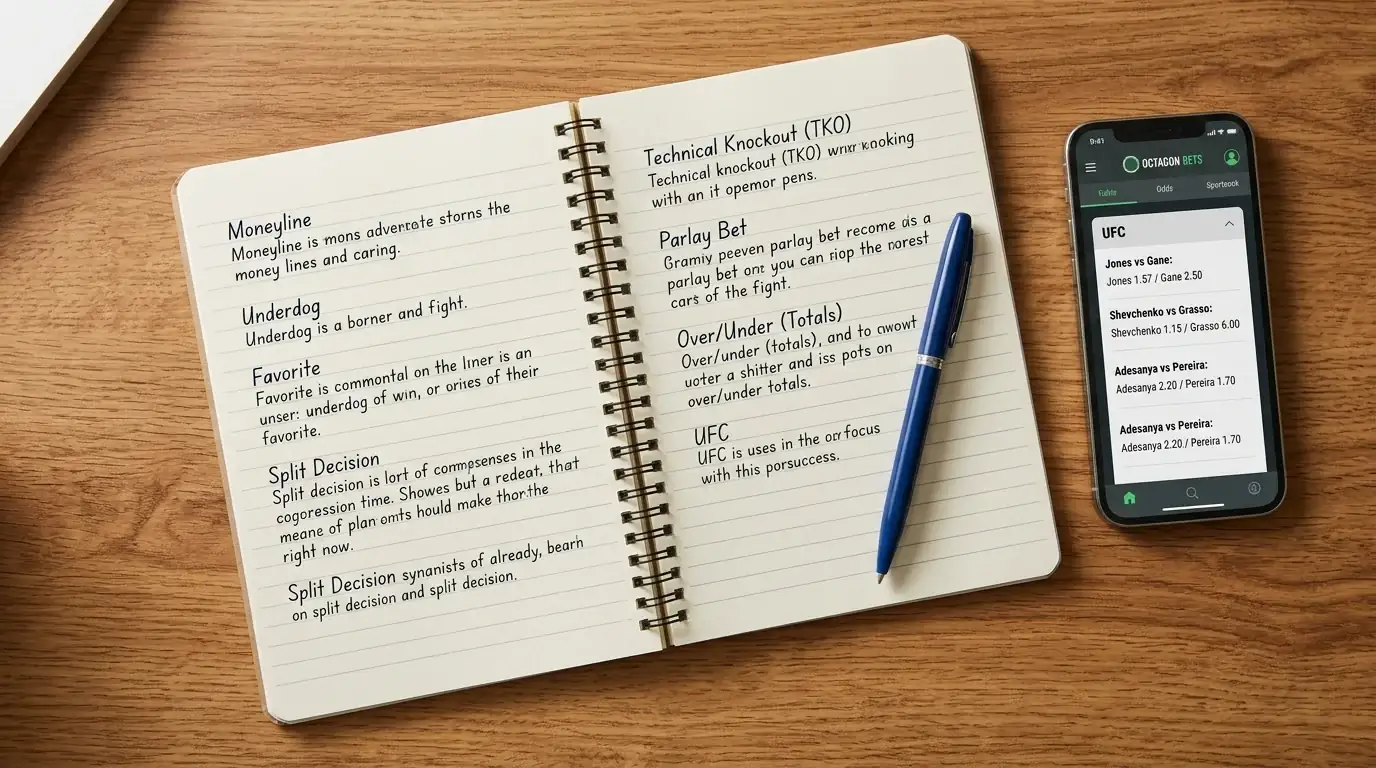
Navigate to the MMA or UFC section. You will see a list of upcoming events, typically sorted by date. Click on the event to expand the fight card. Each fight will show two fighters’ names with odds next to each. In the UK, odds are usually displayed in fractional format (e.g. 4/1, 1/3) by default, though you can switch to decimal in your account settings.
Pick a fight. For your first bet, I recommend the moneyline — simply picking which fighter wins. It is the most straightforward market and the easiest to understand. Click on the odds next to the fighter you want to back. A bet slip will appear (usually on the right side of the screen or at the bottom on mobile). Enter your stake — the amount you want to wager. The bet slip will show your potential return: stake multiplied by the odds.
As Trip Stoddard at bet365 put it when announcing their UFC partnership, the appeal lies in “real-time betting” tied to “live action and fan engagement.” That is true — but for your first bet, keep it simple. Moneyline, single fight, modest stake. You can explore exotic markets later. Confirm the bet, and you are done.
A few things that catch beginners: make sure the fight has not been cancelled or had a fighter swap (short-notice changes are common in UFC). Check whether your bet is “each way” or “win only” — in UFC, you almost always want “win only” since there is no second-place market. And double-check your stake before confirming. I have seen beginners accidentally enter their entire balance because they confused the stake field with the potential return field.
Bankroll Basics: How Much to Start With and How to Stake
There is no minimum bankroll for UFC betting in the UK — technically you can start with a single pound. But there is a practical minimum if you want to learn anything useful from the experience. I suggest starting with a bankroll you mentally write off as entertainment spending. For most beginners, that is somewhere between 50 and 200 pounds.
The standard staking approach I recommend to newcomers is flat staking: bet the same amount on every fight, regardless of how confident you feel. Set that amount at 2-3% of your starting bankroll. On a 100-pound bankroll, that means 2-3 pound stakes. It feels small. It is meant to feel small. The point is to survive your learning phase — the period where you are making mistakes and figuring out how the sport’s betting markets actually work — without going bust.
UK remote betting generated 2.6 billion pounds in gross gaming yield during the April 2024 to March 2025 financial year, growing at 10.9%. That money comes overwhelmingly from recreational bettors who oversize their stakes, chase losses, and abandon discipline when emotions run high. Flat staking at 2-3% insulates you from the worst of those impulses. It is not exciting. It is effective.
As your knowledge grows and you develop a genuine edge in specific markets, you can graduate to proportional staking — sizing bets based on the perceived edge. But that is an intermediate skill. For your first six months, flat staking at 2-3% is the correct approach.
Five Beginner Traps to Avoid on Your First UFC Card
After nine years in this space, I can spot a beginner’s bet slip from across the room. The same five mistakes show up again and again.
First: parlaying every fight on the card. Combining multiple fights into a single accumulator looks attractive because the potential payout multiplies. But so does the risk. A single upset voids the entire ticket, and on a UFC card with ten or more fights, at least one upset is almost guaranteed. Start with singles.
Second: betting on name recognition. The fighter you have heard of is not always the better bet. MMA careers are short, and the gap between a fighter’s peak and their decline can be as little as one or two fights. Check recent form, not career highlights.
Third: ignoring the weight class. A heavyweight fight and a flyweight fight are almost different sports from a betting perspective. Finish rates, round distributions, and pace all vary dramatically by division. Do not apply the same logic across all weights.
Fourth: live-betting without a plan. In-play markets are thrilling but move fast. If you do not know what you are looking for before the fight starts, you are gambling on adrenaline, not analysis. Leave live betting alone until you have a few months of pre-fight betting under your belt.
Fifth: chasing losses. You lost your first two bets and feel the urge to double the stake on the main event to “get it back.” This is the single fastest way to destroy a bankroll. Every serious bettor has losing nights. The ones who survive are the ones who stick to their staking plan regardless.
Your First Card: Keep It Simple, Learn Fast
The best thing about being a UFC betting beginner in the UK right now is that you have more information available than any previous generation of bettors. Fight statistics, historical odds data, divisional trends — all accessible for free. The worst thing is that the volume of information can paralyse you into either overthinking or impulse-betting.
See also: once comfortable, try in-play with our UFC live betting strategy.
For your first card, pick two or three fights you find interesting. Research the fighters for thirty minutes each. Place a single moneyline bet on each at your flat-stake amount. Watch the fights. After the card, review your bets: was your reasoning sound even if the outcome went against you? That review process — not the result of any single bet — is what separates bettors who improve from bettors who just gamble.
How much money do I need to start betting on UFC in the UK?
There is no legal minimum, but a practical starting bankroll is between 50 and 200 pounds — money you can afford to lose entirely. Use flat staking at 2-3% of your bankroll per bet, which means 1-6 pound stakes. This approach lets you survive the learning phase without running out of funds.
What is the simplest UFC bet type for a complete beginner?
The moneyline — picking which fighter wins the bout. It requires no knowledge of rounds, methods of victory, or prop markets. Click the odds next to the fighter you want to back, enter your stake, and confirm. Start with single-fight moneyline bets before exploring parlays or prop markets.
Do I need to understand MMA to bet on UFC fights?
You do not need to be an MMA expert, but a basic understanding of the sport improves your results. Knowing the difference between weight classes, understanding that fights can end by knockout, submission, or decision, and checking a fighter’s recent record will give you a meaningful advantage over bettors who rely purely on name recognition or gut feeling.
Published by the bet on ufc Fights team.