UFC Weight Cuts and Betting: How the Scale Affects Fight Outcomes
 Available in US
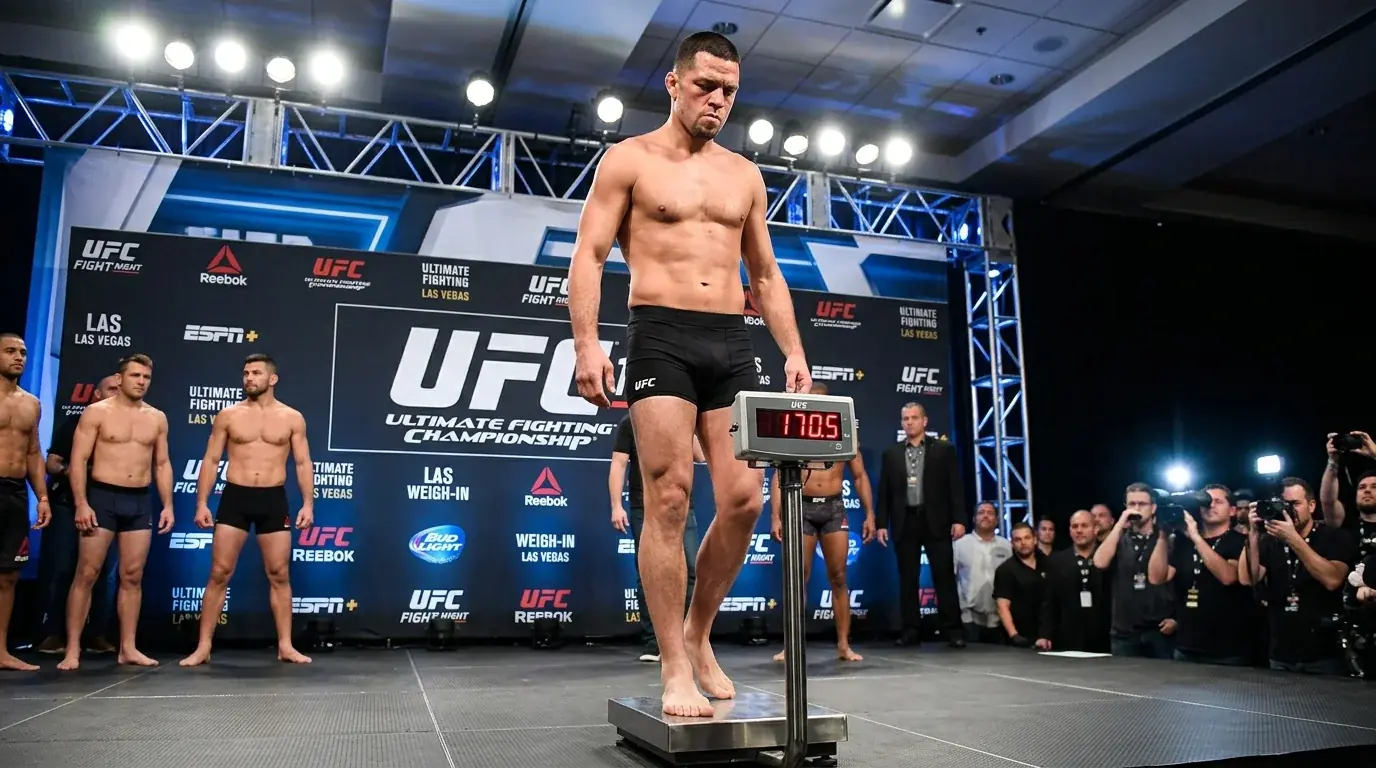
The Weigh-In Tells You More Than the Tale of the Tape
I once backed a bantamweight fighter at -180 who had looked dominant in his previous three bouts. He missed weight by two pounds at the Friday weigh-in, and I held the bet anyway, thinking the weight miss was cosmetic. He gassed out in the second round and lost by submission. The weight miss was not cosmetic. It was a signal that his body had failed to make the cut properly, which meant his rehydration was incomplete, his cardio would suffer, and his chin would be compromised. That lesson cost me 90 pounds and saved me thousands in the years since.
Weight cutting — the process of rapidly dehydrating to make a contractual weight limit before rehydrating overnight — is the most under-analysed variable in UFC betting. Every fighter does it. The severity varies enormously. And the betting market prices it inconsistently, creating value for anyone who pays attention to the weigh-in data and knows what to look for.
See also: bet on ufc fights for fight-week variables and risk factors.
How Weight Cuts Work and Why They Degrade Performance
A typical UFC fighter walks around 10-15% heavier than their contracted weight class. A welterweight (170 lbs) might walk at 190-195 lbs. In the week before the fight, they cut water weight through sauna sessions, hot baths, and restricted fluid intake, dropping to 170 for the official weigh-in on Friday. They then rehydrate overnight and fight Saturday at somewhere between 180-190 lbs, depending on their body and rehydration protocol.
When the cut goes well, the fighter rehydrates fully and performs at their natural level. When it goes badly — and it goes badly more often than the odds reflect — the consequences cascade through fight night. Dehydration impairs cognitive function, which slows reaction time. Incomplete rehydration weakens the chin, making a fighter more susceptible to knockouts. Severe cuts deplete glycogen stores, which tanks cardio in later rounds. The UFC held 517 fights in 2024, and a meaningful subset of those outcomes were influenced by one fighter’s compromised weight cut — a factor the algorithm-driven odds rarely capture adequately.
The UFC introduced a new weight management policy in recent years requiring fighters to check in at escalating intervals before fight week, but the policy has not eliminated the problem. Fighters still cut aggressively, and the consequences still show up on fight night.
Weigh-In Signals Every Bettor Should Watch
The official weigh-in is Friday. Between the weigh-in and the fight on Saturday, information is available that most bettors ignore. I watch every weigh-in for the fights I am considering, and I look for specific visual and numerical signals.
Weight misses are the most obvious signal. A fighter who misses weight has failed to cut properly, which almost always means a harder-than-expected dehydration process. The line usually adjusts slightly after a weight miss, but in my experience the adjustment is insufficient. Fighters who miss weight lose at a rate significantly higher than the post-miss odds suggest — particularly in later rounds when the cardio and chin effects of the bad cut manifest.
Last-fighter-to-weigh-in timing matters. The weigh-in window is typically open for several hours. Fighters who weigh in early have made weight comfortably. Fighters who weigh in during the final minutes were likely cutting to the wire, which suggests a harder cut. This timing information is available if you watch the weigh-in stream or follow the live reporting from MMA media — and it is almost never reflected in the odds.
Visual cues at the ceremonial weigh-in — hollow cheeks, sunken eyes, laboured movement, visible shaking — indicate severe dehydration. These are not foolproof (some fighters always look gaunt at weigh-in and perform fine), but they are directional. When I see a fighter who looks visibly worse at the weigh-in than in previous fights, I flag the matchup for potential weight-cut impact and reassess the line accordingly.
Division Patterns: Where Weight Cuts Hit Hardest
Not all divisions are equally affected by weight cutting. The severity of cuts varies by division culture, and certain weight classes are notorious for producing fighters who push the limits of safe dehydration.
Bantamweight (135 lbs) and flyweight (125 lbs) historically see the most extreme cuts relative to body size. Cutting 15-20 pounds from a 150-pound frame is proportionally more stressful than cutting the same amount from a 200-pound frame. The performance degradation is correspondingly more severe. I price weight-cut risk higher in lighter divisions and lower at heavyweight, where most fighters cut little or no weight.
At heavyweight (265 lbs), the weight-cut dynamic reverses. Many heavyweights actually weigh in under the limit — 250, 240, sometimes 230 — because the division has no lower bound. The absence of a severe cut means heavyweight fighters are generally better hydrated and closer to their natural condition on fight night, which is one reason the 65% finish rate at heavyweight is driven by power rather than compromised opponents.
Women’s strawweight (115 lbs) is another division where cuts are proportionally extreme. Fighters walking at 130-135 cutting to 115 are shedding 12-15% of their body weight, and the performance effects are measurable across the division. Decision rates at strawweight are among the highest in the UFC, partly because the cardio impact of these cuts reduces finishing ability in later rounds.
Using Weight-Cut Data in Your Betting Models
I incorporate weight-cut information as a modifier to my base probability estimate, not as a standalone input. A fighter with a history of hard cuts gets a 3-5% probability adjustment downward in my model. A fighter with a documented weight miss gets a 5-10% adjustment. These numbers are rough, calibrated from tracking outcomes over several years, but they consistently improve my hit rate — particularly on over/under rounds and method-of-victory props.
The reason weight-cut analysis is underpriced in UFC betting markets is that it requires information gathering that most bettors skip. Watching weigh-in streams, tracking weight-miss history, monitoring fighter social media for hydration and diet clues during fight week — none of this is difficult, but it is time-consuming, and the betting public overwhelmingly prefers to analyse stylistic matchups and fight statistics rather than biological preparation. That preference creates the gap I exploit.
A practical example: two fighters with identical records and similar styles meet at bantamweight. Fighter A has a history of comfortable weight cuts and never missed the mark. Fighter B missed weight once and has posted social media content suggesting a difficult camp. The moneyline is even. My model adjusts fighter B’s win probability downward by 4-5%, which creates a clear value play on fighter A — a play invisible to anyone who only looked at the fight statistics. For a broader look at how statistics integrate into UFC betting analysis, the data-driven approach guide builds on these principles.
When the Cut Changes the Fight — and When It Does Not
Weight-cut analysis is a tool, not a cheat code. A bad cut does not guarantee a loss, and a comfortable cut does not guarantee a win. Skill, preparation, game planning, and in-cage adjustments all matter more than hydration status in isolation. The value of weight-cut analysis is at the margins — it turns a 50/50 fight into a 55/45 in your estimation, or it reinforces a lean you already had from the stylistic breakdown.
See also: build custom multi-legs with our UFC same game parlay guide.
I never bet solely on weight-cut information. It is always one factor among several. But in a sport where the margin between winning and losing is razor-thin — where a single round of diminished cardio can be the difference between a decision win and a decision loss — the margins matter. And the weigh-in gives you an information edge that most of the market is not using.
Does missing weight affect a UFC fighter’s performance?
Yes, significantly. A weight miss indicates a harder-than-planned dehydration process, which typically leads to incomplete rehydration, reduced cardio capacity, and increased susceptibility to knockouts. Fighters who miss weight historically underperform relative to the adjusted odds, particularly in later rounds when the physical effects of the bad cut compound.
Which UFC weight classes have the worst weight cuts?
Bantamweight (135 lbs), flyweight (125 lbs), and women’s strawweight (115 lbs) tend to see the most severe cuts relative to body size. Fighters in these divisions often cut 12-20% of their walking weight, which carries greater performance risk than the proportionally smaller cuts at middleweight, light heavyweight, and heavyweight.
Prepared by the bet on ufc Fights editorial staff.